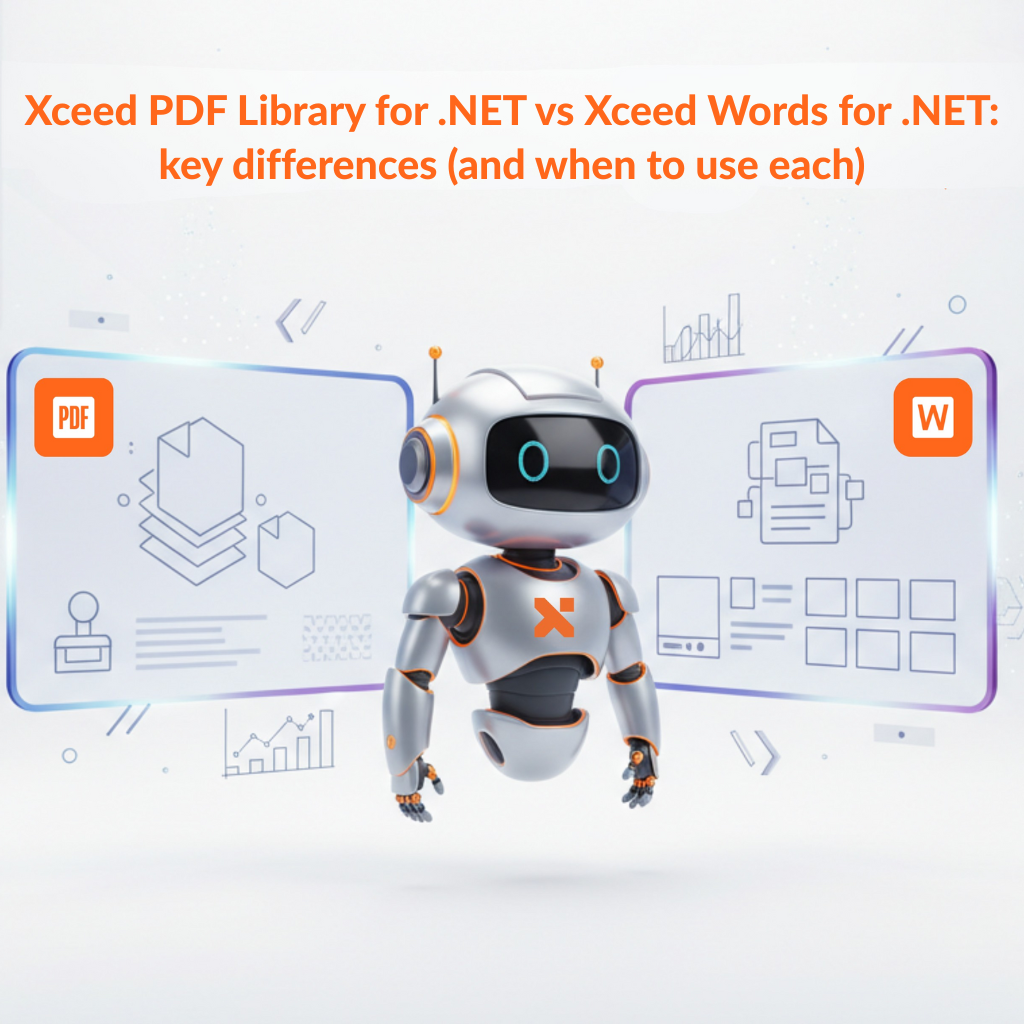
If you’re building .NET apps that generate, edit, or automate documents, it’s easy to lump “Word” and “PDF” into the same bucket. In practice, they solve different problems.
This post breaks down the practical differences between Xceed PDF Library for .NET and Xceed Words for .NET, so you can pick the right tool (or the right combo) for your workflow.
If you’re building .NET apps that need to generate, edit, or automate documents, you’ve probably felt the pain: Word templates that break, PDF workflows that turn into brittle hacks, and libraries that are either too limited or too heavy to ship.
PDF generation is one of those “looks easy, gets messy fast” features. In .NET 8, you can keep it clean by treating PDF creation like a pipeline (inputs → rendering → output) and using C# 12 primary constructors to reduce boilerplate without hiding architecture.
This guide shows a practical, production-friendly approach to PDF generation with a clean architecture mindset plus where primary constructors help (and where they don’t).
This guide shows a practical, production-friendly approach to PDF generation with a clean architecture mindset plus where primary constructors help (and where they don’t).
Christmas week has a funny rhythm for developers. Some teams are deep in release hardening, others are finally catching up on tech debt, and a few lucky folks are closing the laptop and actually taking a break.
From all of us at Xceed Software, Merry Christmas. And if you’re still shipping, supporting customers, or keeping production calm through the holidays: we see you.
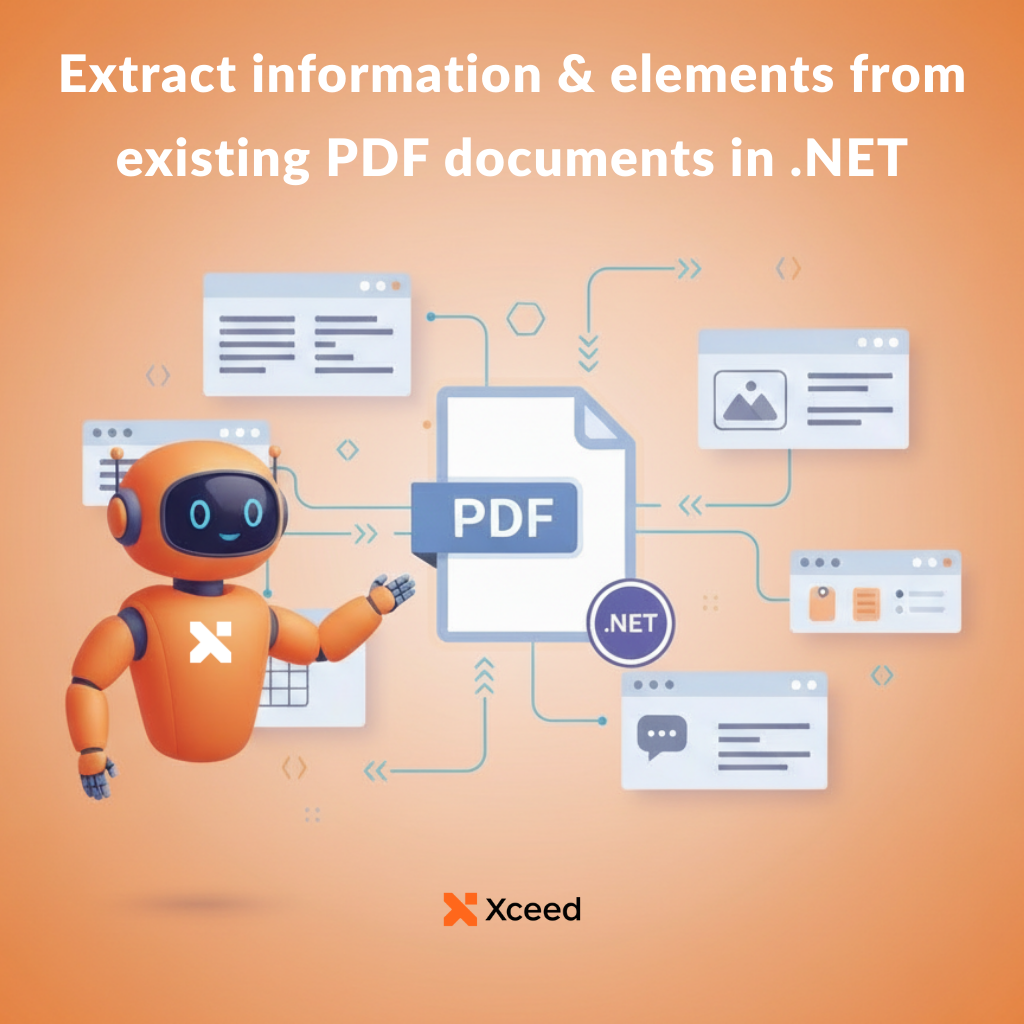
This guide walks through the extraction tasks most teams hit in production, the pitfalls to plan for, and a practical approach to implementing PDF extraction in a .NET app.
If you build .NET apps that need to output professional PDFs (invoices, reports, contracts, onboarding packets), you’ve probably felt the pain: heavy dependencies, awkward APIs, or “simple” libraries that get complicated the moment you need forms, signatures, or consistent typography.
Xceed PDF Library for .NET is a brand-new, lightweight way to build, edit, sign, and secure PDF documents directly from your .NET applications.
The concept is intentionally simple: an easy-to-use API that lets you add, modify, or extract elements to and from a PDF file without fighting the framework.
The latest release of Xceed Words for .NET brings a fresh wave of innovation to document automation, making it easier for .NET developers to build, customize, and collaborate on Word, PDF, and text documents. Version 5.2 isn’t just an update , it’s a leap forward in how modern teams create, share, and visualize information in code.
The Xceed team is excited to announce great updates across our .NET developer tools, designed to help you build faster, more robust, and visually stunning applications—whether you’re handling document automation, data visualization, or secure file transfers. Here’s what’s new in the Xceed ecosystem
Future-proofing document workflows in .NET 10 isn’t optional it’s a strategic imperative. As Microsoft accelerates release cycles and compliance demands intensify, legacy document solutions quickly become bottlenecks for modern dev teams. Xceed Words delivers a stable, actively maintained API for .NET 10 and beyond, combining robust DOCX support, async processing, and seamless CI/CD integration. The result: faster migrations, fewer support tickets, and document workflows that scale confidently into the future.
Building WPF apps with DIY grids can quickly turn into a maintenance nightmare—slow UIs, missing features, endless hacks. Discover why Xceed DataGrid for WPF is the professional choice for .NET teams needing high-performance, customizable, and production-ready data grids that accelerate delivery and delight users.
PDF Library for .Net is now out! Bundle it with Words for .Net for only 100$ for a limited time at checkout
add_action('wp_footer', function() { ?>
document.addEventListener('DOMContentLoaded', function() {
var cb = document.querySelector('#form-field-Email_Consent');
if (cb) cb.value = 'Yes';
});








Document Automation in .NET: Xceed Words 5.2 Unlocks Collaboration & Charting